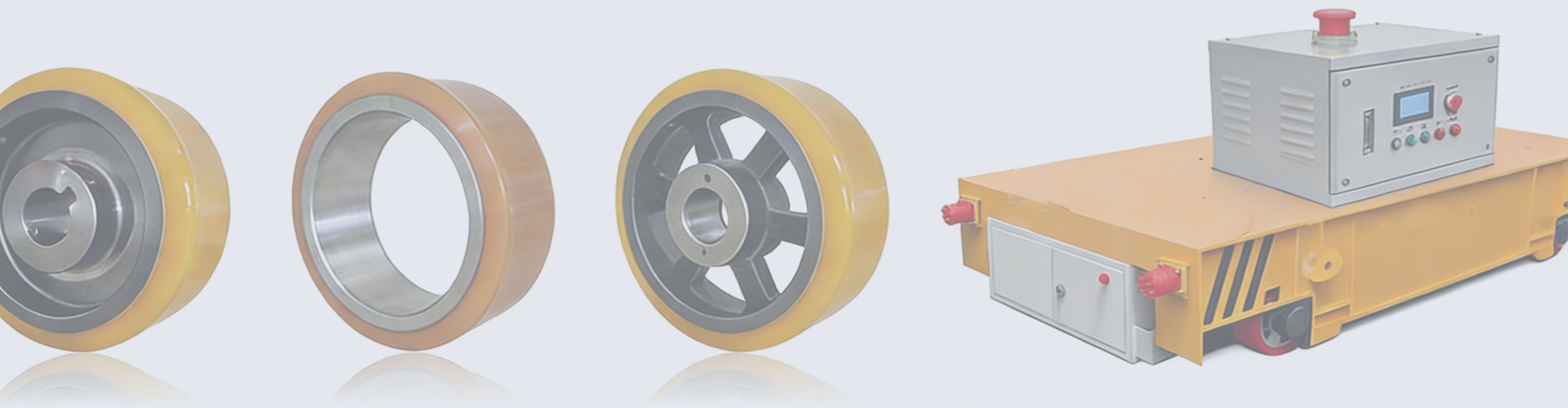


In the automotive manufacturing industry, automated production lines have become an important guarantee for improving production efficiency and product quality. In automotive welding shops, welding robots need to operate continuously and at high frequencies for long periods, and their chassis movement systems place higher demands on stability, wear resistance and load capacity. Polyurethane rollers for welding robot chassis in automotive factories are important auxiliary components that support equipment operation, ensuring smooth movement and precise positioning of robots on production lines.
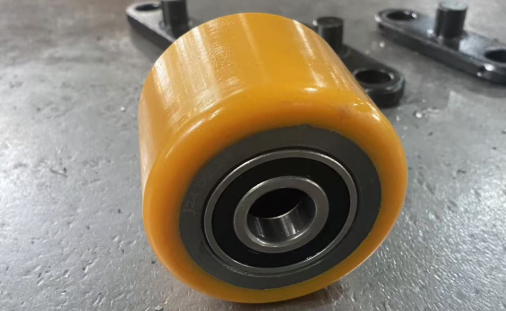
Performance Requirements for Welding Robot Chassis Rollers & Wheels
When a robot chassis runs on rails or mobile platforms, it must withstand its own weight, shocks caused by mechanical arm movements and wear from long-term continuous operation. Key requirements for polyurethane rollers include:
Ability to bear the weight of the robot and its dynamic loads.
Adaptability to industrial environments with long-term continuous operation.
Precision in positioning during robot welding processes.
Compatibility with frequent start-stop and speed changes of the robot.
Structural Design and Manufacturing Process of Polyurethane Wheels
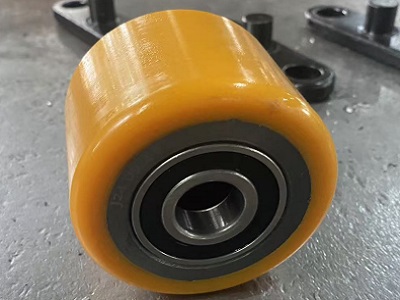
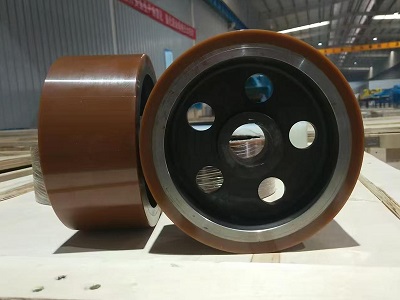
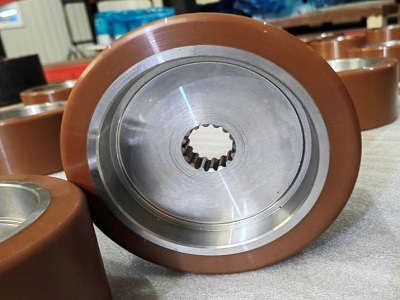
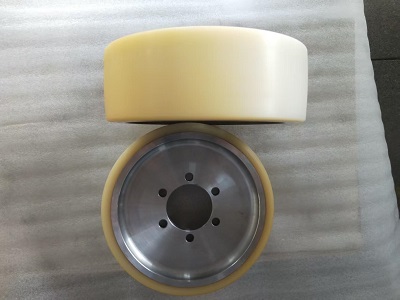
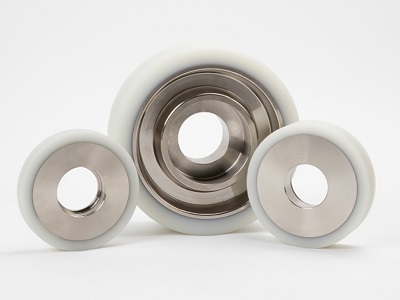
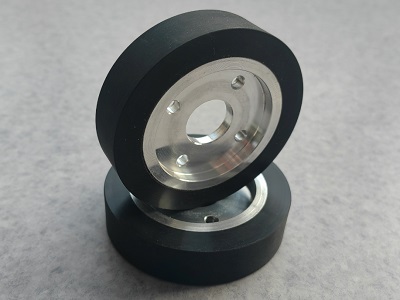
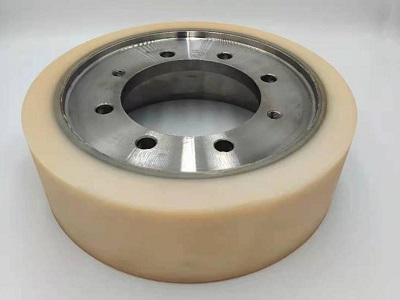
Metal core: Mostly made of high-strength alloy steel or stainless steel, precision-turned and dynamically balanced to ensure rotational concentricity.
Polyurethane layer: Directly molded and coated onto the metal core via casting, achieving molecular-level bonding and reducing the risk of delamination.
Bearing system: Built-in high-precision deep groove ball bearings or tapered roller bearings; some models include seals to protect against welding spatter and dust.
Surface finish: Optional grooved, patterned or smooth surface designs to suit different floor materials.
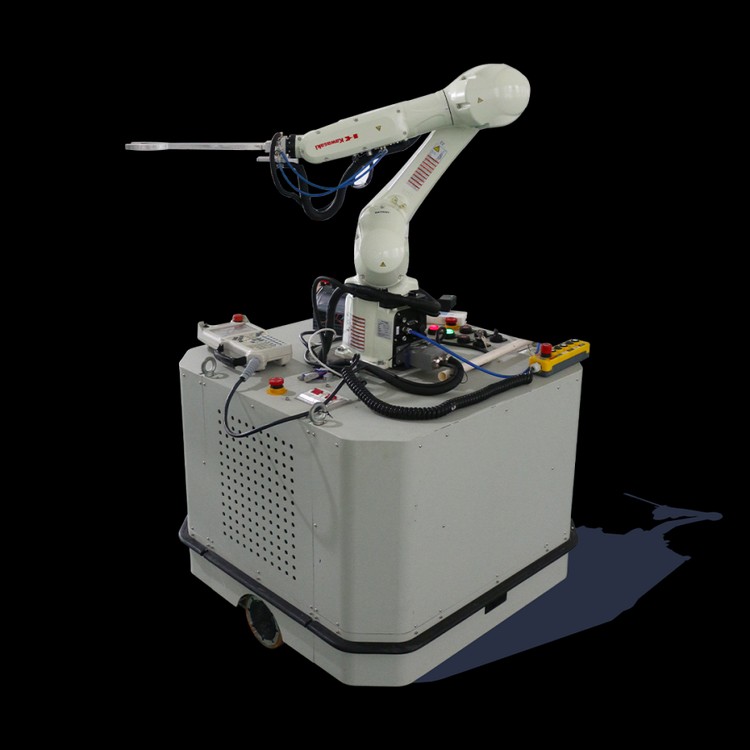
Product Advantages of Welding Robot Travel Wheels
Excellent wear resistance, several times that of ordinary rubber, significantly extending roller service life.
The combination of a high-strength steel core and high-density polyurethane material enables the rollers to withstand heavy loads from welding robots and chassis systems.
Under frequent acceleration, deceleration and welding motion changes, polyurethane rollers effectively absorb shocks and ensure stable equipment operation.
Precision-machined rollers guarantee smooth movement of the robot chassis on rails and accurate welding positioning.
Selection and Application Recommendations
| Parameter Category | Reference Indicators |
|---|---|
| Load Capacity | Static/dynamic rated load (kN) |
| Hardness | Shore A 80 - 95 |
| Rolling Resistance | ≤0.02 (low-resistance design) |
| Operating Temperature Range | -20°C to +80°C (up to 120°C with special formulation) |
| Mounting Method | Bolt hole spacing, shaft diameter tolerance (h6/g6) |
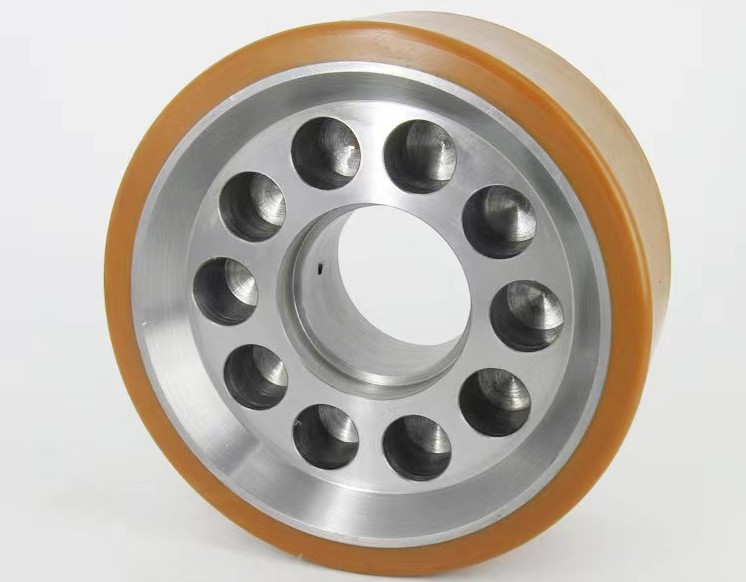
Choosing high quality polyurethane rollers & wheels not only improves the operational stability of welding robots but also effectively reduces equipment maintenance costs, providing a critical foundation for automotive manufacturers to build efficient and reliable automated production lines. Feel free to contact us for free customized solution and product quotation!